By Rick Green Sentinel Staff Sep 29, 2026
Millions of additional dollars from New Hampshire’s meals and rooms tax would go to towns and cities in a legislative proposal aimed at helping reduce high property taxes.
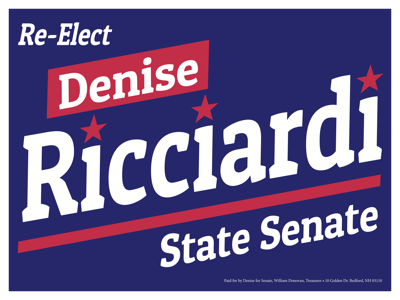
State Sen. Denise Ricciardi, R-Bedford, wants 40 percent of the money from this 8.5 percent tax on restaurant meals, accommodations and car rentals to go to municipalities, up from the 30 percent they get now.
“Trust me, this is the only property tax relief you are getting,” she said in an interview Monday. “It goes to the towns, and whether the town uses it to reduce the tax rate or they buy a new ambulance, or whatever they may need, I have no control over.”
In the 2026 fiscal year, which ended on June 30, $140.2 million from this tax was sent to municipalities in amounts based on population, including $2.2 million for Keene, $748,549 for Swanzey, $650,755 for Peterborough, $636,494 for Rindge, $537,656 for Jaffrey, $417,684 for Winchester and $390,353 for Hinsdale.
In 2021, Ricciardi, whose district covers parts of Cheshire and Hillsborough counties, led the effort to increase to 30 percent the percentage of the rooms and meals tax shared with municipalities.
The municipal share had remained significantly below that percentage as a result of legislative decisions that ran counter to the original intent of the tax when it was enacted in 1967, which was to provide 40 percent to towns and cities.
“I don’t believe in broken promises,” Ricciardi said. “The state promised 40 percent for municipalities and we’re not doing it. And that fell on the back of the property taxpayers because they were not getting the money from the state.”
She said that when lawmakers talk to their constituents one of the biggest things they are told is that New Hampshire’s property taxes are too high.
With no overall income tax or sales tax, the state relies heavily on property tax to fund local governments and public schools, resulting in some of the highest average property tax rates in the country.
Ricciardi expressed confidence the Legislature will pass her measure, which is now in the form of a legislative service request, a precursor to the detailed bill that will be introduced next year.
Another attempt to lower property taxes will be a question the Legislature and Gov. Kelly Ayotte placed on the Nov. 3 ballot.
Voters will be asked whether they want to freeze their local school district’s property taxes, with adjustments allowed for inflation and new construction. Another part of the question asks whether to limit a school administrative unit’s central office spending to 6 percent of total school district appropriations.
Phil Sletten, research director for the N.H. Fiscal Policy Institute, noted in a report earlier this year that property taxes “raise the cost of owning a home through direct taxation, and rents increase when costs are passed through from homeowners to renters.”
He also noted that property tax costs differ widely from community to community.
“Property values also vary considerably, and higher property tax rates may be more common in communities with lower taxable property values as higher rates are needed to collect enough dollars to fund public services such as roads, bridges, law enforcement, and education,” he said.
For example, in 2025, owners of a $500,000 house in Acworth would pay $8,030 in yearly property taxes, while a same-valued house one town west, in Charlestown, would pay $18,270, Sletten said.
The Monadnock Region has some of the highest property tax rates in the state, including Charlestown, which charges $36.54 per $1,000 of assessed value. Keene’s rate is $34.37 and Marlborough’s is $31.24.
—
Rick Green can be reached at 603-352-1234, extension 1435, or rgreen@keenesentinel.com